
Spiders
We are the one-stop-shop for all of your pest control needs in Metro Vancouver area.
Locally owned and operated pest control company.
Common House Spider
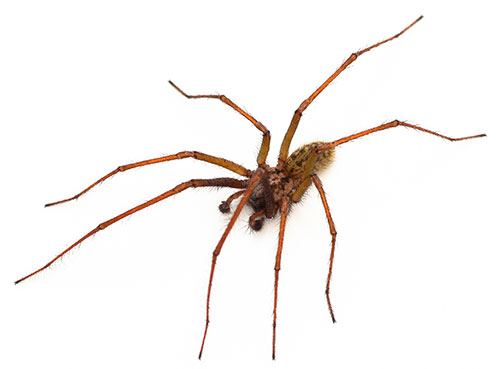
Common House Spider are the most commonly found types of spiders worldwide. Their bodies can grow to be 4mm – 6mm and have a leg span of up to 2.5cm. House spiders are typically black, brown, tan, or grey, with patterns that make them look spotted.
Though most spiders are venomous and considered predators, of the thousands of species found in Canada, few are actually considered a health threat. In fact, spiders are actually helpful in controlling other pests in the home or garden since they feed on other insects and spiders. Spiders, however, rarely bite humans. Most spiders’ fangs are too small or weak to puncture human skin. The average life span of a spider is usually one to two years.
Family
Pholcidae
Scientific Name
Parasteatoda tepidariorum
Biology
Adult house spiders live for over a year. Males seek out a female mate by plucking at her web until she responds. Over her lifetime, a female spider produces up to 17 egg sacs, each carrying 100-400 eggs. The eggs are wrapped in a silk sac and hung in the female’s web until they hatch and the spiderlings disperse.
Behaviour
Common house spiders build their webs in living spaces in homes, such as corners of rooms, under furniture, window corners, and other warm spaces. Male and female house spiders share a web for long periods of time, and several other females will build webs in close proximity. Occasionally when two females cross paths, they fight to the death. House spiders feed on household pests, like flies, mosquitoes, ants, and wasps.
Control & Prevention
It is recommended that homeowners get rid of spiders by clearing away their webs and egg sacs with a vacuum or broom. Limiting the spiders’ food source is also an effective way to make your
home an undesirable habitat. Seal cracks around windows and doors, fix any screens that have rips or holes, and plug any other entry points. Strong scents, such as essential oils, also deter spiders. Spiders eat other insects, so removing the food source is necessary. Exercise caution when bringing items into the home during the fall for winter storage as they may conceal spiders or their eggs. A heavy duty vacuum cleaner with a crevice attachment can be used to remove spiders and webbing from around eaves, window frames and along the edges of siding panels.
Need help with common house spiders extermination?
Call Nikol Pest Control at 604-364-3201 for a free estimate.
Cellar Spider
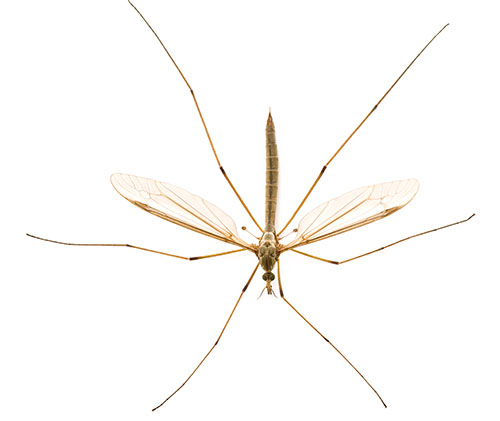
There are two types of cellar spiders: long-bodied and short-bodied. Long-bodied cellar spiders have a 2” leg span, while the short-bodied species have a ½” leg span. Both species have 9mm long bodies, and are brown, tan, or grey in colour.
Family
Pholcidae
Scientific Name
Pholcus phalangioides
Biology
Cellar spiders originated from the subtropics and therefore mate throughout the year, despite seasonal changes. After taking a year to mature, they can live for another 2 years. Female spiders will hold 20-30 eggs until they hatch. The young spiders will shed and change their skin 5 or 6 times before they mature.
Behaviour
Cellar spiders prefer to build their nests in close proximity of each other, creating web communities. They live primarily in basements and cellars, earning them their name, but also nest in crawl spaces, closets, attics, rock piles, and other dark, humid spaces. They eat small moths, flies, mosquitoes, and other insects and small pests. If food is scarce, cellar spiders will eat each other.
Control & Prevention
It is recommended that homeowners get rid of spiders by clearing away their webs and egg sacs with a vacuum or broom. Reducing the humidity in your home and limiting the spiders’ food source are also effective ways to make the habitat undesirable and drive them out. Seal cracks around windows and doors, fix any screens that have rips or holes, and plug any other entry points.
Need help with cellar spiders extermination?
Call Nikol Pest Control at 604-364-3201 for a free estimate.
Wolf Spider
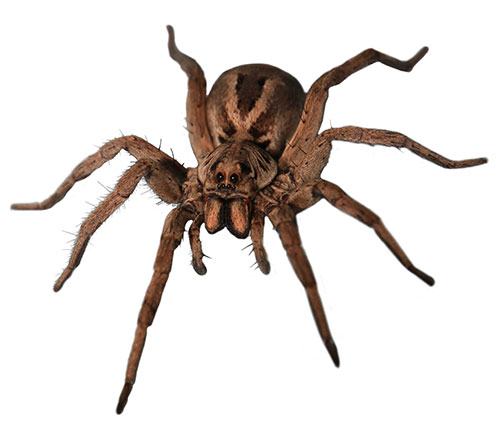
Wolf spiders’ bodies can grow 1cm – 3.5cm (1.3”) and have a leg span of up to 3”. They are patterned in black, brown, and grey hues and rely on camouflage to survive. Because of their size and furry appearance, they can be confused with tarantulas.
Family
Lycosidae
Scientific Name
Hogna aspersa
Biology
Wolf spiders are solitary spiders and only interact to mate, feed, or both. Female wolf spiders sometimes kill and eat the male after they mate. The female will then carry her eggs – over 100 of them – in a silk sac under her abdomen until they hatch. Once hatched, the spiderlings cling to their mother’s abdomen for a few weeks before dispersing aerially.
Behaviour
Unlike most other spiders, wolf spiders hunt for their prey rather than building webs. They’re nocturnal and have the third-best eyesight of all spiders. Wolf spiders prey on other spiders, large bugs like grasshoppers and beetles, and occasionally small reptiles. They dwell in burrows in woodlands, dry inland shrubs, wet coastal forests, meadows, and suburban gardens. In the fall, they seek warmth and can enter homes, settling near windows, doors, garages, basements, and houseplants.
Control & Prevention
Clearing your yard of debris, such as grass clippings, leaves, firewood, or mulch, and reducing the number of dark hiding spots in your garden, will deter wolf spiders from nesting there.
Regularly vacuuming or sweeping rooms that are usually dark, such as cellars or attics, will also keep wolf spiders away. Seal cracks around windows and doors, fix any screens that have rips or holes, and plug any other entry points.
Need help with wolf spiders extermination?
Call Nikol Pest Control at 604-364-3201 for a free estimate.
About Us
NIKOL Pest Control was established in 2011 by Plamen Nikolov, certified pest control technician and long time North Vancouver resident. Plamen has a degree in chemistry obtained in his native country of Bulgaria. He also graduated with a degree in Environmental Engineering from the British Columbia Institute of Technology. Plamen has more than 25 years of work experience in the environmental and pest control field.
Our company is based on the belief that our customers’ needs are of the utmost importance. We are committed to meeting those needs. As a result, a high percentage of our business is from repeat customers and referrals.

Residential & Commercial Pest Control
Services in Vancouver
Our local exterminators understand how pests behave in the Greater Vancouver area. From ants and rodents to bed bugs, cockroaches, fleas, and more, we provide targeted pest control solutions designed to eliminate the problem and prevent it from returning.
No matter the size of the infestation, we develop a treatment plan based on the specific pest, the severity of the issue, and your property. The goal is simple: effective results and long-term protection for your home or business.
Targeted Pest Control Services
We offer specialized treatments for the most common pest problems in Vancouver:
Service Area
Devoted to Serving Families & Businesses in Greater Vancouver
We’re proud to support our Great Vancouver friends, neighbors, and businesses with reliable, effective pest control and extermination services. From ants to bed bugs, mice, and more—we’re equipped to handle it all. Our goal is to build lasting partnerships with the people we serve—which means we’re here to help with any pest problem, big or small.
Nikol Pest Control offers its services in the following cities in the Great Vancouver area:
North Vancouver Office Location:
807 17th Street West
North Vancouver, BC V7P 3M3
Phone:
604-364-3201
Hours:
Monday – Friday: 7 am to 7 pm
Saturday – Sunday: 9 am to 7 pm
Let’s Solve Your Pest Problem – Fast
Pest problems don’t go away on their own. The sooner you take action, the easier they are to control and eliminate.
Whether you’re dealing with ants, rodents, bed bugs, or another infestation, our team is ready to help with fast, effective pest control solutions across Greater Vancouver.
Don’t let pests take over your home or business. Get expert help you can trust.
Request your pest control service today
Let’s Solve Your Pest Problem – Fast
Pest problems don’t go away on their own. The sooner you take action, the easier they are to control and eliminate.
Whether you’re dealing with ants, rodents, bed bugs, or another infestation, our team is ready to help with fast, effective pest control solutions across Greater Vancouver.
Don’t let pests take over your home or business. Get expert help you can trust.
Request your pest control service today